The hardest part of airport innovation starts after the pilot
A successful trial answers whether a technology can work. An airport still has to decide how it will become part of the operation.
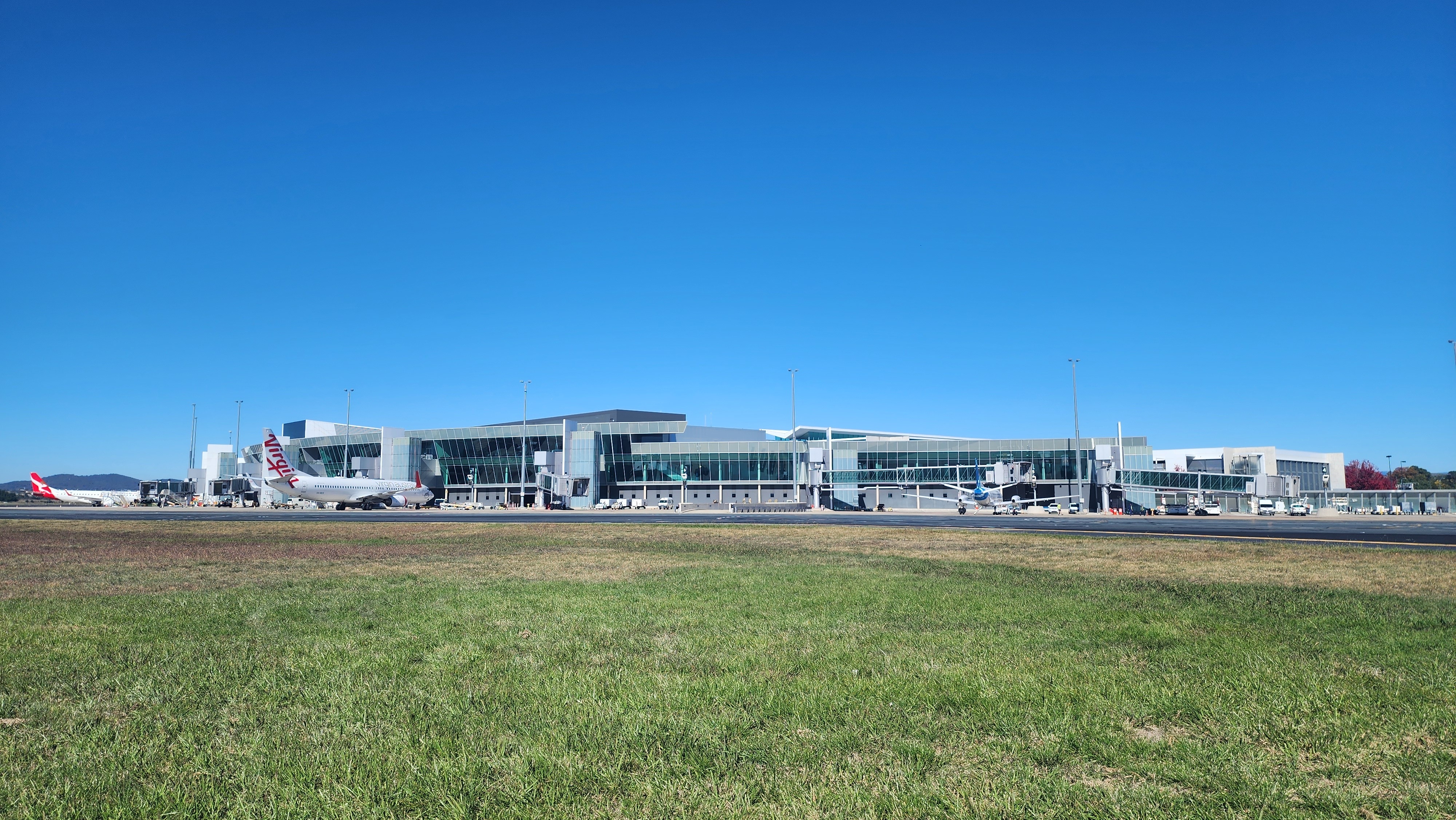
Illustrative photograph: Shkuru Afshar / Wikimedia Commons · CC BY-SA 4.0; cropped and desaturated.
The handover that deserves more attention
An airport pilot can finish with a compelling demonstration and an unresolved question: who will carry the service on Monday morning? That is the point at which an innovation project becomes an operational commitment. Someone must pay for it, support it and decide what happens when it underperforms.
What the evidence says
ACI EUROPE’s Airport Innovation Handbook, launched on 24 November, provides a useful measure of the gap. Its survey found dedicated innovation teams at 17 of 20 responding airports and dedicated budgets at 12 of 20. Among the 18 respondents to the scaling-barriers question, 10 identified regulation or compliance, nine cited organisational culture, and seven each cited budget constraints and legacy IT integration. These are small, question-specific samples, not estimates for the entire airport sector.
Give the next phase an owner
The handbook describes business units taking ownership of industrialisation after a successful proof of concept. Our editorial view is that this handover should be agreed before the trial starts. A project sponsor can secure a demonstration; the receiving operational team must be able to explain how it will run the resulting service. Those are different commitments.
Write the acceptance test in operational language
Consider a proposed tool that flags a delayed turnaround task. The acceptance test should include what happens after the flag appears: which team receives it, how it is checked, how quickly an intervention remains useful and where completion is recorded. An accurate detection that arrives after the available intervention window has little practical value. That is a design question to test, rather than an assumption to leave until deployment.
Budget for the ordinary work
Our recommended scale-up plan includes training cover, interface maintenance, configuration changes, support outside office hours and ownership of the source data. Put those costs beside the expected benefit. If the business case works only while a supplier’s demonstration team is on site, the operating model is incomplete.
Decide what would stop the rollout
A trial should have an explicit route to a no-go decision. Persistent false alerts, unclear accountability or an unacceptable recovery process may be reasons to change the design or stop. Define those thresholds in advance, along with the evidence needed to proceed. Doing so makes a positive result more credible.
The question for the investment meeting
Ask the proposed service owner to describe a difficult shift six months after deployment. Who notices a failure? Who has the authority to intervene? What remains available while the fault is investigated? A team that can answer those questions has moved the conversation beyond a promising demonstration and towards a service it is prepared to operate.
Sources
- Airport Innovation Handbook — ACI EUROPE, 2026-11-24
Related reading
A shared airport picture still needs someone authorised to act
The new Total Airport Management position paper puts decision-making ahead of technology procurement. Here is what that means for an operations centre.
Every airport AI proposal needs a withdrawal plan
Editorial view: the ability to stop relying on a model should be part of its operating design from the beginning.
DFW completes its third end-around taxiway
Airport announcement digest: the Southwest project adds another route around active runways.